Intellectual Property Blog
Plagiarism vs Copyright Infringement
January 21, 2021
Plagiarism and copyright infringement are related, but still distinct in different ways. Though the two may often overlap, each situation can be distinguished from the other. Let us consider the difference between copyright infringement and plagiarism.
1. Plagiarism is using someone else's work or ideas without acknowledging the author or giving proper credit to the original source. Copyright infringement is the use of someone else’s work without obtaining the owner’s permission.
2. Plagiarism is concerned with “non-attribution of the work or idea to the author or original source”. It is the act of passing off the work or idea of someone else as one’s own. Copyright infringement is concerned with “unauthorised use of the work”. It is not applicable where the unauthorised use is covered under the exceptions to copyright (known as fair dealing) such as for academic or research purposes.
3. Plagiarism is a wider situation than copyright infringement. Plagiarism covers both the ideas and expression of the ideas irrespective of whether it is protected by copyright or not. Copyright infringement can only occur when the creative work is protected by copyright. Copyright protects the expression of ideas and not just the ideas.
4. Plagiarism is rooted in academic norms while copyright is a creation of statute or law. Plagiarism is generally speaking not unlawful while copyright infringement is unlawful. However, plagiarism may be unlawful when it falls within the ambit of copyright infringement.
Let us now consider hypothetical scenarios to enhance our understanding of the different concepts and how both can occur in one situation.
Scenario one
Mr. A copied one of Shakespeare’s works and posted it on his website without including Shakespeare’s nam e in the write-up. This cannot be Copyright infringement because Shakespeare’s works are now in the public domain (this means the copyright has expired). While there is no Copyright infringement, there is plagiarism because Mr. A did not give credit to Shakespeare as the author and has passed off the work to the public as belonging to him rather than Shakespeare.
Scenario two
Mr. C, a renowned Nigerian Musician, just recorded his latest song titled: My gangster love. Mrs. B uploaded Mr. C’s latest song on her website for the public to purchase at a particular price. On the website, it is boldly written: “My gangster love by Mr. C available for download, click here to buy”. However, Mrs. B did not obtain any permission from Mr. C and has no form of contract with him to distribute or sell his song. There is no case of plagiarism because the song was duly attributed to Mr. C and she never passed off the song to be her own. However, Mr. C can make a case of copyright infringement because the song has been recorded (this means it has been expressed in a medium) and therefore has a valid copyright over the song. The act of Mrs. B using/distributing/selling Mr. C’s song without his permission amounts to copyright infringement.
Scenario three
Using scenario two but assuming that on Mrs. B’s website, it is it is boldly written: “My gangster love available for download, click here to buy” without any mention of Mr. C’s name. The implication is that Mr. C can take action for both plagiarism and copyright infringement because Mr. B did not obtain permission and at the same time, she did not give credit to him for the song.
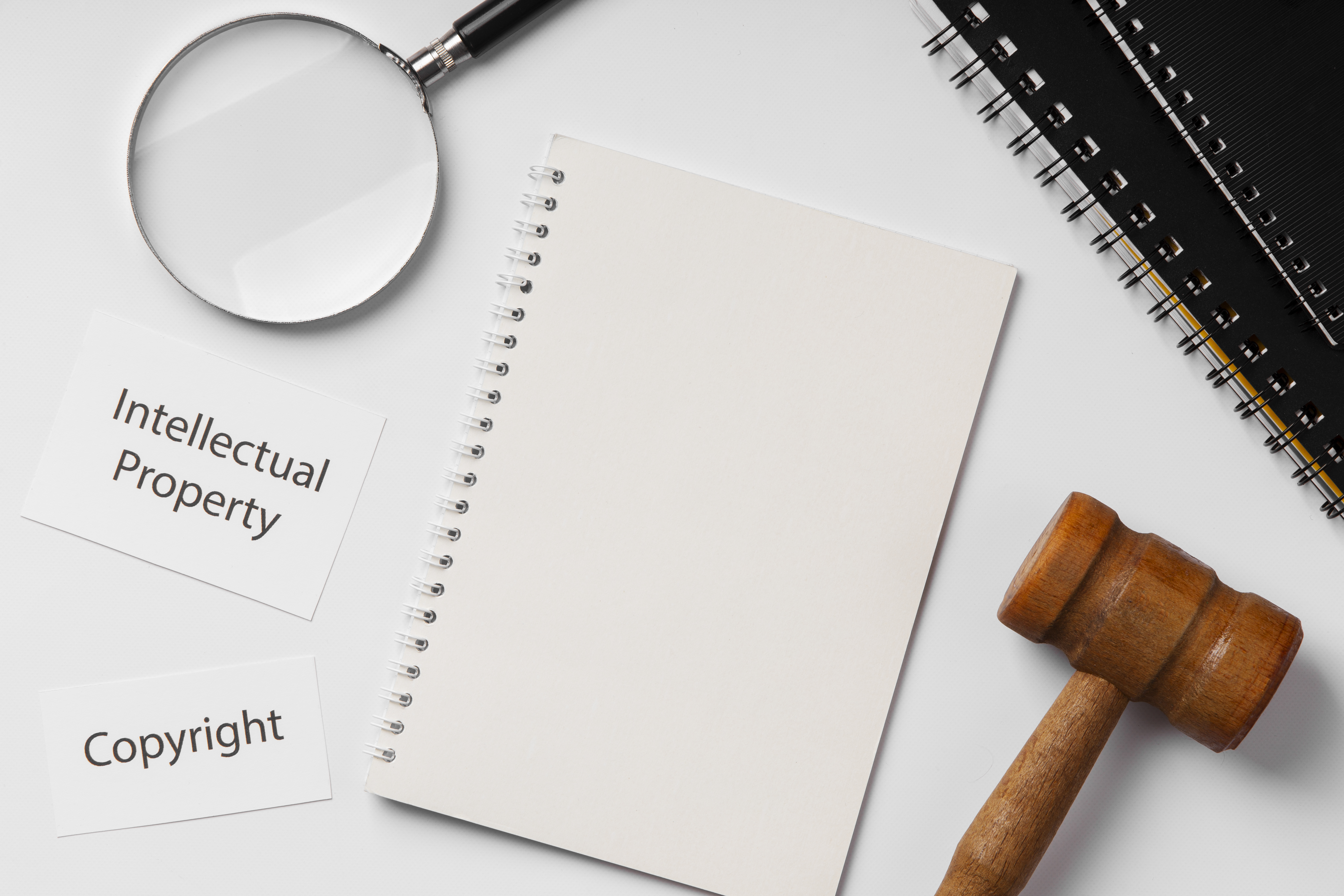
Copyright Notice: What It Is and Why It Matters
February 19, 2021
It's been a minute here already and yes, I know you've missed my premium content on 'LetsTalkIPwithDaphne.'
Have you heard about Copyright Notice before?
Alright, so let me tell you. It is a written notice stating that a creative work is protected by Copyright.
Is Copyright Notice required?
No. Copyright protection is automatic once a creative work is fixed in a tangible medium (i.e. in a form that can be accessed or communicated or reproduced). Copyright Notice is not required by law and its absence does not make the work lose the Copyright protection.
What then is the benefit?
The benefit lies in its use. Copyright Notice is used to inform the public that a particular work is subject to Copyright. This helps in establishing a case of Copyright infringement because the infringer cannot rely on the defence of not being aware of the Copyright existing on the work.
How to write a Copyright Notice
1. The symbol “©” or the word “Copyright”.
2. The year of the publication
3. The name of the owner
4. Statement of rights

Akande v RCCG: Alleged Copyright Infringement Explained
April 2, 2021
There is an alleged copyright infringement claim being laid by Akande Emmanuel against the Redeemed Christian Church of God (RCCG). The summary of the facts is that in 2005, Mr. Akande released a song, "I'll never be ungrateful." The song gained popularity among members of the Redeemed Christian Church of God
Please note that when Mr. Akande released the song, he had not registered the copyright with the Nigerian Copyright Commission but later in 2016, when he discovered that the National Praise Team of RCCG had used the song in their 'Ancient of Days' album, he went ahead to register the copyright on his music album. Mr. Akande wrote a letter to RCCG alleging a copyright infringement on the basis that the song was used without his permission or an acknowledgment.
From that time, it appeared that there was some sort of amicable settlement because he was invited over by the Director of Music at RCCG and there were discussions. He was subsequently given a platform at the Holy Ghost service to sing the song, and he was introduced as the original writer of the song.
However, he discovered months later that some sort of money was approved by the General Overseer and yet, he never got any monetary benefit. Now, he is claiming N350 million for this copyright infringement. Let me point out that the song, "I will never be ungrateful" is a gospel song. I have heard people say, "is he serious? He must be joking. It's a church, it’s a gospel song" and the first thing that came to my mind was "what gave people the impression that Mr. Akande cannot claim or allege copyright infringement over a gospel song?"
Section 1 of the Nigerian Copyright Act provides for the works that are eligible for copyright protection; one of which includes musical work. The Copyright Act did not define musical work to include only secular music or did not exclude gospel music. So musical work here includes any type of music.
The fact that the song of the alleged copyright infringement case is a gospel music does not mean that it cannot be protected by copyright. So, the first take home point is that gospel music falls within the category of musical work and therefore is an eligible work for copyright.
The second point to note is that copyright protection is an automatic type of protection. The moment your song is expressed in a fixed medium, it is eligible for copyright. To express a creative work in a fixed medium means that it is in a format capable of reproduction or being accessed by a third party.
What this means is that the moment Mr. Akande released his song on a CD, he automatically had copyright protection over that work. The fact that he got his copyright certificate after the alleged infringement does not mean that the song is not eligible for copyright protection. The song became eligible for copyright protection in 2005 when it was released in a fixed medium.
The further step by Mr. Akande to get a Copyright Certificate is what we know as notification to the Nigerian Copyright Commission (NCC). What this means is that the owner notifies the Commission of a particular work eligible for copyright protection and then NCC gives a certificate in return. This certificate can be used as proof of evidence for the work. It is pertinent to note that whether or not Mr. Akande has registered the song with NCC, he can claim his right to prevent a copyright infringement. Although, evidence in civil dispute is by way of balance or probability and there is a principle that says, "he who asserts must prove." If a party alleges copyright infringement, the party needs to adduce evidence that proves his copyright over the creative work as the owner of same.
Whilst copyright protection is automatic, it is important to notify the Nigerian Copyright Commission and obtain a Certificate that could be a prima facie proof of your copyright in case of an infringement.
Another point to note is that intellectual property as a whole has two angles namely:
1. Moral right
2. Economic right.
Moral right means acknowledging the authorship of such work, that is, giving credence to the owner.
Economic right means that the author should get some form of financial compensation or benefit from their work. This is just to encourage creativity and innovation.
The fact that Mr. Akande performed at the Holy Ghost service where he was acknowledged to be the owner of the copyright does not mean that he cannot still allege copyright infringement. The reason is that what was done at the Holy Ghost service relates to his moral right. Did RCCG compensate him after breaching his right? Did they stop selling the album with his song included? Did they stop making the public believe that the song belongs to the National Praise team? Did they obtain his permission subsequently? Once these questions can be answered in the negative, there is a case of copyright infringement.
In summary, the take home points from this case are:
1. Gospel songs or works are eligible for copyright protection.
2. The moment the song was released, that is, expressed in a fixed medium, it has automatic copyright protection.
3. The further step in notifying the Nigerian Copyright Commission as the certificate can be used in evidence to prove a case of copyright infringement.
4. The grievance about not getting financial compensation is valid. Every creative person is entitled to economic benefits from copyright work.
I believe that both Mr. Akande and RCCG can use ADR to try to resolve this dispute amicably such that it is a win-win for both parties. I would expect that RCCG involves an intellectual property lawyer to communicate with Mr. Akande’s lawyer.
I hope that Mr. Akande is not forced to use the last resort of approaching the Federal High Court which is the Court with jurisdiction over copyright cases.
At this point, I am curious to see how this case will turn out, but I hope you learnt one or two things.
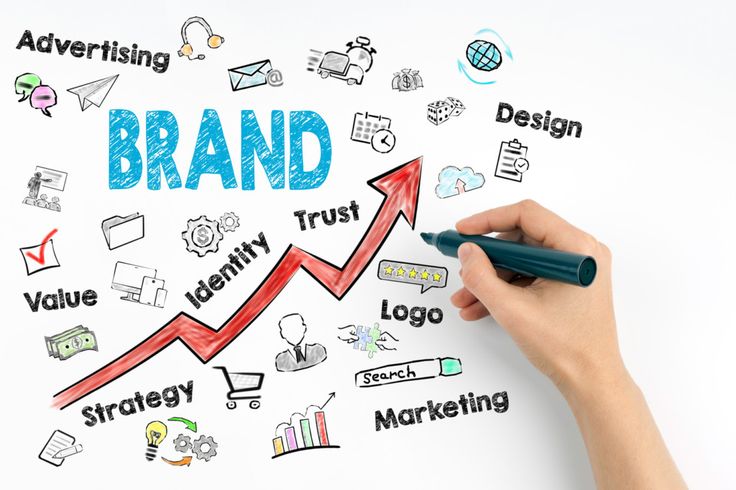
Trademarks and Brands: Why Consistency Matters
August 19, 2022
A trademark is more than a logo — it is the heart of a brand...
A trademark is more than a business stamp, it’s the heart of a brand. While registering a trademark gives your business the exclusive right to protect its name, logo, or slogan, it’s how you use that mark that truly defines your brand in the eyes of customers.
The Role of Trademarks in Brand Building
A trademark serves as a source identifier; a sign that tells consumers where a product or service comes from. When used consistently, trademarks help build recognition, trust, and loyalty.
Why Consistency in Trademark Use Matters
Registering a trademark is just the beginning. Inconsistent usage such as changing spelling, fonts, or structure can weaken protection and confuse consumers.
Common Mistakes to Avoid
● Altering the mark in ads, packaging, or on social media.
● Using different fonts or styles that aren’t part of the official branding.
● Treating the mark as a generic term (e.g., using FedEx as a verb).
● Inconsistent spelling, punctuation, or capitalization across platforms.
All these can weaken the association between the mark and your brand.
Tips for Using Trademarks Effectively
1. Stick to the Registered Version: Always use your trademark in the exact form in which it was registered. If your official mark is SunLite, don’t start writing Sunlite or SUN LITE.
2. Educate Your Team and Partners: Designers, marketers, and vendors must all know how to use your trademark properly. Create a branding style guide that outlines correct usage.
3. Monitor and Enforce Regularly check how your mark is being used internally and by others. If necessary, send cease and desist letters to enforce proper usage.
Final Thoughts
Your trademark is a powerful tool but only if you use it correctly. Beyond obtaining registration, consistency in usage is what transforms a trademark into a trusted brand. It's not just about protecting your mark, it's about building identity, reputation, and loyalty over time.
Call to Action
Do you already have a registered trademark? Review how you are using it across your channels and make sure every use strengthens, not weakens, your brand.
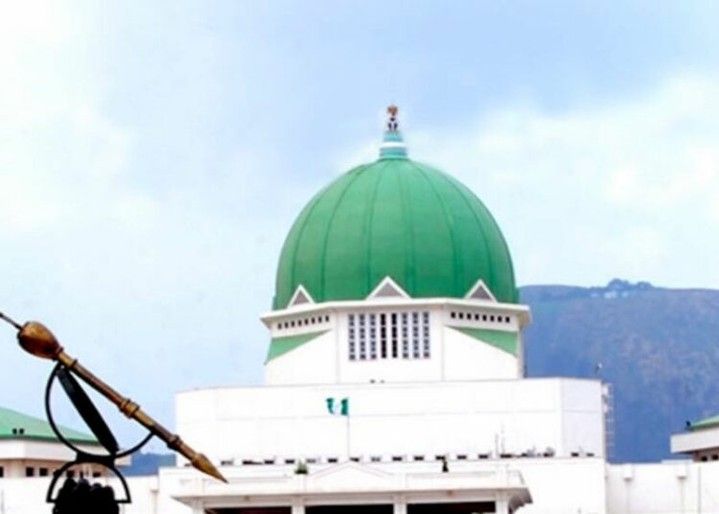
Review of the Nigeria Copyright Act 2022
March 31, 2023
The Nigeria Copyright Act 2022 modernizes copyright protection...
Thanks to the technological developments of the 21st century, copyrightable creations largely permeate today’s world. From musical creations to content writing, literary works, and digital media, there has been a rapid growth of creative content globally.
With this influx of digital content comes the need for a sophisticated and comprehensive legal framework to ensure protection. After a long legislative process, the Nigeria Copyright Act 2022 finally came into force on March 17, 2023.
This Act replaced the outdated 2004 version which could not keep up with modern technological realities.
Stronger Digital Content Protection
The 2022 Act focuses heavily on digital rights. Issues like online piracy, unauthorized streaming, and digital distribution are now expressly covered. Digital platforms are required to remove infringing content upon notification.
Reforms to Collective Management Organizations (CMOs)
CMOs are now more tightly regulated. The Act improves transparency and ensures creators receive fair and timely compensation for their works.
Broader Definition of Copyrightable Works
The scope now includes modern digital works such as software and video games, not just traditional works.
Clearer Exceptions and Fair Dealing Guidelines
The Act refines fair dealing provisions for education, research, and public interest use, balancing creator rights with public access.
Harsher Penalties and Better Enforcement
Higher fines and possible imprisonment now apply to repeat offenders, strengthening enforcement.
Overall, the Nigeria Copyright Act 2022 is a major upgrade that better protects creators in today’s digital economy.
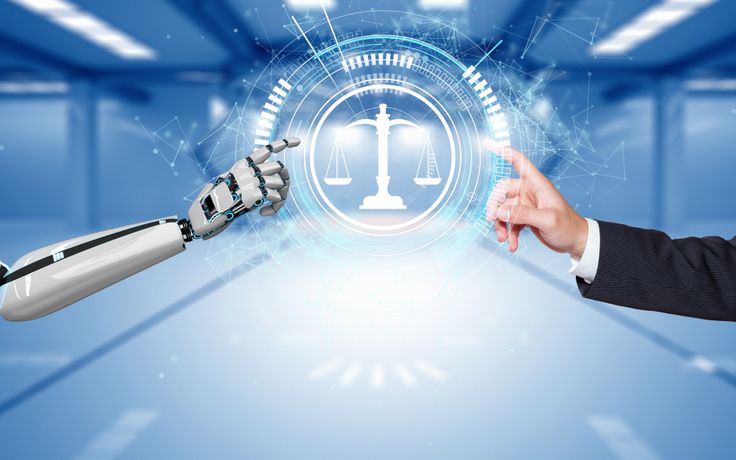
Intellectual Property and Artificial Intelligence
May 24, 2024
AI is reshaping creativity and innovation...
AI is reshaping creativity and innovation.
With our constantly evolving world comes Artificial Intelligence (AI), reshaping the way humans create, share, and protect their intellectual properties.
From text, music to art and software, AI tools like ChatGPT, Midjourney, and DALL·E have made it easier than ever to generate original-looking work at a large scale.
However, this convenience raises serious questions about intellectual property (IP) rights, especially for human creatives and entrepreneurs in the intellectual property sector.
Generally, intellectual property law protects the creations of the human mind. Works such as music, books, films, inventions, and designs authored by humans are protected by Intellectual property laws across jurisdictions. But what happens when a machine generates these works? This reality blurs the lines between human and machine authorship. For example:
Who owns a digital painting created by an AI tool?
Can AI-generated code be patented? All over the world, IP laws are struggling to catch up with the ever-evolving development of AI systems. Most jurisdictions, including Nigeria, do not currently recognize AI as an author or inventor yet. This creates a grey area where creators using AI tools must carefully navigate ownership, and infringement issues. Since it is obvious that AI has come to stay and it also has numerous benefits, how can you maximize it as a Creative/Entrepreneur?
AI Is a Tool, not a Creator
The first thing you
should know is that while AI can help you generate content, most IP systems still require a human to be the owner. If you are using AI in your creative process, make sure you are involved enough in directing or editing the output to claim authorship.
Be Careful with Total Reliance on AI-Generated Data
Many AI tools are trained on publicly available contents. These contents may include IP protected materials. If your AI-generated output too closely resembles existing works, you might unknowingly infringe on someone’s copyright.
Use AI for Drafting, not Final Work
It's sometimes hard to not throw the entire weight on AI. However, to stay safe legally and ethically, use AI to brainstorm, draft, or accelerate your process. Do not let it completely replace your creativity. This gives you a stronger claim to originality.
Stay Informed on Changing Laws
IP laws around AI are evolving quickly. Some countries are beginning to explore frameworks that allow partial ownership or shared rights. If you are a business owner or content creator, staying updated could help you protect your assets.
Consider Contracts and Disclaimers If you outsource content creation using AI or sell AI-assisted products, be clear in your contracts about the authorship, ownership, and liability. That way, you can prevent disputes that may arise in the future.
AI is not just disrupting how creations of the mind are made. It is challenging the very foundation of how ownership is defined. For creatives and entrepreneurs in Nigeria and beyond, this is both an opportunity and a risk. In all, embrace the tools. Most importantly, don’t ignore the legal and ethical frameworks around them.